
Dentures Lansdale PA
Custom Dentures Designed by Prosthodontists
When you have lost many or all of your teeth, a well-designed denture can restore much more than your smile. It can improve your ability to eat and speak, support your facial appearance, and help you feel comfortable and confident in everyday life.
At Buxmont Prosthodontics & Restorative Dentistry in Lansdale, PA, dentures are designed with careful attention to fit, function, bite, esthetics, and long-term comfort.
As prosthodontists—dentists with advanced specialty training in the restoration and replacement of teeth—we routinely care for patients with complex restorative needs. Whether you need your first denture, want to replace an older denture that no longer fits well, or are considering dental implants for additional support, we can help you understand your options and choose the treatment that makes the most sense for you.
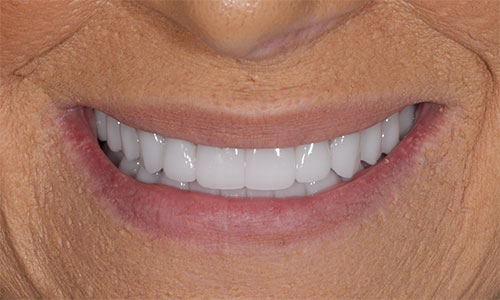
Modern Denture Care: Digital Precision + Proven Techniques Modern technology has changed the way dentures can be made.
We incorporate digital scanning, computer-aided design (CAD), 3D printing, and advanced denture materials when they can improve precision, efficiency, or predictability. Digital records can also make it easier to reproduce a denture in the future if it becomes lost, damaged, or worn.
But technology alone does not make a great denture.
The quality of a denture still depends heavily on accurate impressions, proper extension and support, a carefully developed bite, appropriate tooth position, and thoughtful evaluation of your smile and facial appearance.
For that reason, we use a hybrid digital and conventional approach rather than forcing every patient through the same workflow. Traditional techniques such as border molding, precision impressions, and try-in appointments are incorporated whenever they provide a clinical advantage.
Our goal isn’t to make a denture “digital.”
Our goal is to make the best denture we can for you.
Types of Dentures We Offer
Complete Dentures
Complete dentures replace all of the teeth in the upper jaw, lower jaw, or both.
A successful complete denture requires much more than choosing teeth and making an impression. We carefully evaluate the supporting tissues, jaw relationships, bite, lip and facial support, tooth position, speech, and smile before completing the final prosthesis.
When appropriate, digital technology can streamline portions of this process while maintaining the clinical steps necessary for a predictable result.
Removable Partial Dentures
When several natural teeth remain, a removable partial denture can replace the missing teeth while using the remaining teeth for support and stability.
Partial dentures can be designed using different materials and configurations depending on your anatomy, remaining teeth, esthetic concerns, and long-term treatment goals.
Because the health and position of the remaining teeth have a major influence on the success of a partial denture, we evaluate the entire mouth—not simply the spaces where teeth are missing.
Replacement Dentures
Dentures do not last forever.
Over time, the mouth changes while the denture itself does not. Bone and gum tissue can gradually change shape, denture teeth can wear, and the bite can become less stable.
If your current dentures are loose, worn, uncomfortable, or no longer look the way you would like, we can evaluate whether they should be adjusted, relined, repaired, or replaced.
When possible, an existing denture can also provide valuable information about what you like —and what you would like to change—in your new prosthesis.
Implant-Supported Denture Options
Some patients want greater stability than a conventional removable denture can provide.
Dental implants can often be used to improve the retention and stability of a removable prosthesis. For other patients, a fixed full-arch implant restoration may be more appropriate.
These treatments involve different levels of surgery, maintenance, cost, and complexity. As prosthodontists experienced in both removable prosthetics and implant dentistry, we can help you compare these options and determine which approach best fits your anatomy, goals, and priorities.
removable full denture
Removable Partial Denture
Implant Supported Overdenture
Our Denture Process
Every patient is different, so the exact sequence of appointments can vary. A typical treatment may include:
Comprehensive Evaluation
Impressions and Digital Records
Establishing Your Bite and Smile
Try-In and Evaluation
Final Denture Fabrication
Delivery and Follow-Up
Patient Resources
Why Choose a Prosthodontist for Dentures?
Prosthodontics is the dental specialty focused on restoring and replacing teeth.
Dentures can appear deceptively simple, but difficult cases often involve complicated relationships between the gums and supporting bone, jaw position, bite, facial support, speech, esthetics, remaining teeth, and previous dental treatment.
Specialist-level planning can be particularly valuable for patients who:
- Have struggled with poorly fitting dentures
- Have significant bone or tissue loss
- Have a complicated bite
- Want to improve the appearance of an existing denture
- Still have natural teeth requiring restorative treatment
- Are deciding between conventional dentures and dental implants
- Have undergone extensive previous dental treatment
- Need a comprehensive plan involving multiple types of treatment
Our approach is to look at the entire restorative picture and recommend the solution that offers the best balance of health, function, esthetics, maintainability, and long-term predictability.
Benefits of Digital Denture Technology
Digital technology offers several meaningful advantages when used appropriately.
- Greater efficiency: Digital workflows can reduce the number of appointments and the amount of chair time required in selected cases.
- Precise computer-aided design: CAD software allows detailed control over tooth position, bite relationships, and denture contours.
- Modern denture materials: Milled and 3D-printed denture materials can offer highly consistent manufacturing and material properties.
- Stored digital records: Once a denture has been digitally designed, the records can often be saved. If a denture is lost or damaged in the future, this can make replacement considerably easier.
Most importantly, digital technology gives us another set of tools. We combine those tools with established prosthodontic principles rather than allowing the technology to dictate the treatment.
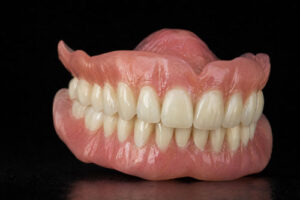
What Should a Good Denture Look and Feel Like?
A good denture should do more than replace missing teeth.
We want your denture to provide appropriate support for your lips and face, establish a functional bite, allow you to speak naturally, and create a smile that suits your appearance.
That doesn’t necessarily mean perfectly straight, perfectly white teeth.
Small variations in tooth position, shape, characterization, and shade can often create a more natural result. We discuss these choices with you so that your final smile reflects your preferences rather than someone else’s idea of what dentures should look like.
Fit is equally important. Although no removable prosthesis can reproduce natural teeth exactly—and lower complete dentures can be particularly challenging—a carefully designed denture should maximize the support, stability, and retention available from your individual anatomy.
Frequently Asked Questions About Dentures
How many appointments does it take to make dentures?
The number of appointments depends on the complexity of the case and the workflow being used. Digital techniques can reduce the number of visits in some situations, while more complex cases may benefit from additional impression or try-in appointments.
We prioritize predictability over completing treatment in an arbitrary number of visits.
Are digital dentures better than traditional dentures?
Not automatically.
Digital dentures offer significant advantages in design, manufacturing efficiency, material consistency, and the ability to store the prosthesis digitally. Conventional techniques remain extremely valuable for obtaining accurate impressions and verifying fit, bite, and esthetics.
For many patients, the best result comes from combining both approaches. Will my dentures look natural?
That is one of our primary goals.
We consider tooth shape, shade, position, smile characteristics, facial proportions, lip support, and your personal preferences when designing the denture. Our objective is not simply to replace missing teeth, but to create a smile that looks appropriate for your face.
Will I need adjustments after receiving my dentures?
Usually, yes.
The tissues supporting a removable denture are sensitive, and minor sore spots can develop as you begin wearing and chewing with a new prosthesis. Bite adjustments may also be necessary.
Follow-up appointments allow us to make these refinements as you adapt to your new dentures.
Can you improve dentures made somewhere else?
Often.
We frequently evaluate patients who are unhappy with the fit, bite, comfort, or appearance of an existing denture. Depending on the underlying problem, we may recommend an adjustment, reline, repair, remake, or a different treatment approach.
Should I consider dental implants instead?
Possibly, but implants are not automatically the best treatment for every patient.
Implants can significantly improve denture stability and can also support fixed restorations. However, implant treatment involves additional surgery, cost, treatment time, hygiene requirements, and long-term maintenance.
We can evaluate both conventional and implant-supported options and explain the advantages and compromises of each before you decide.
Dentures Designed Around the Patient
There is no single denture technique that is ideal for every person.
Some patients benefit from a highly digital workflow. Others require more traditional clinical techniques. Many benefit from a thoughtful combination of both.
At Buxmont Prosthodontics & Restorative Dentistry, we use modern technology alongside established prosthodontic principles to create dentures designed around your anatomy, function, appearance, and long-term needs.
If you are considering dentures, replacing an older prosthesis, or wondering whether dental implants could improve your treatment, we invite you to schedule a consultation at our Lansdale office.